
Is Paddleboarding Hard? + 10 Paddleboarding Tips to Get Started
One of the first things people ask me about my SUP, is is paddleboarding hard? Short answer, no, not really. For the long answer, and a few paddle boarding tips, read on!
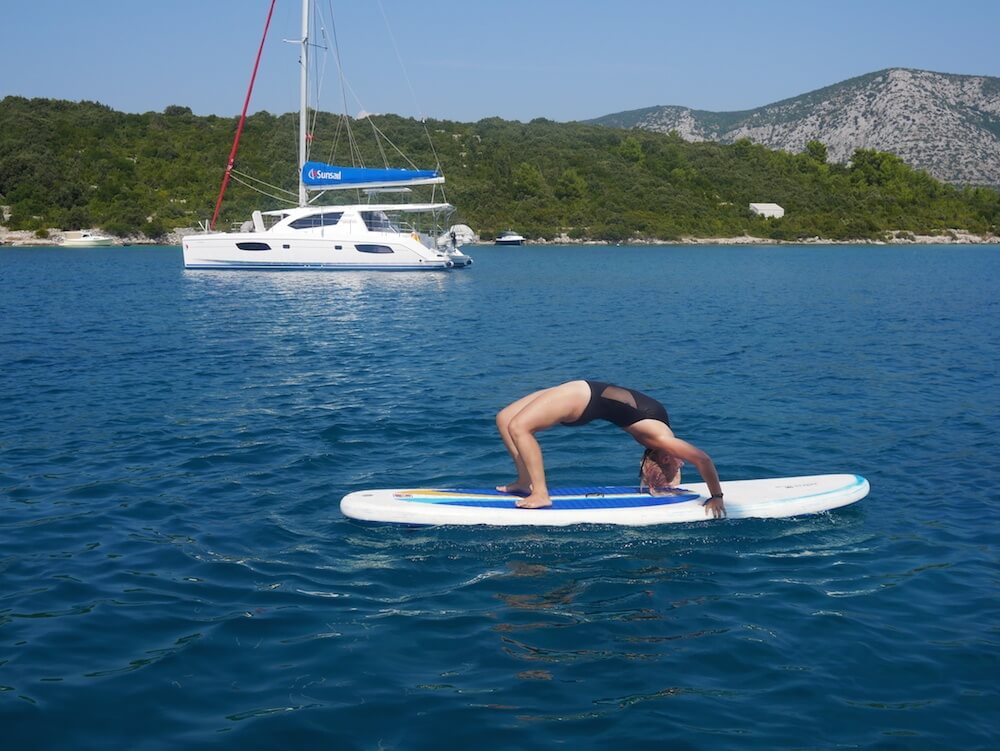
Paddleboarding provides an excellent core workout for your abs, back, arms and legs while also giving you some quality time on or near to nature, and the great outdoors. Whether you’re a beginner or an advanced paddler I’ve got 10 paddle boarding tips below to get started off right.
I’ve been paddleboarding for a few years now, and have tried it in Antigua, Aruba, Florida, and for the last two years, mostly paddle boarding in Hampshire, where live. I paddleboard year round, and yes, that includes paddle boarding in winter. I have been on a little break the past four months, as I’m about to have a baby, but I’m already looking forward to getting back on the water, once it feels like a good idea to do so!
I want to share some of my top tips to help you become a more proficient paddle boarder, and to answer the all important question – is paddleboarding hard?
Is paddleboarding hard?
Paddleboarding is best described as a cross between surfing and kayaking, depending on the water conditions.
Over the lockdowns, and the last two years, the water sport quickly became the newest trend. Paddle boards were even sold out for months in some cases – couldn’t make them fast enough! Paddle boarding basically involves being on top of an inflatable board and using your hands to push yourself across the surface of calm, flat waters in order to get exercise or enjoy nature from new perspectives.
I like to think of paddleboarding as my own private boat for exploring with friends.
Essentially, all you have to do is get on it, stand on it, and paddle – ideally without falling in. Unless it’s a lovely sunny day of course, and you need some refreshment.
10 paddleboarding tips to get started
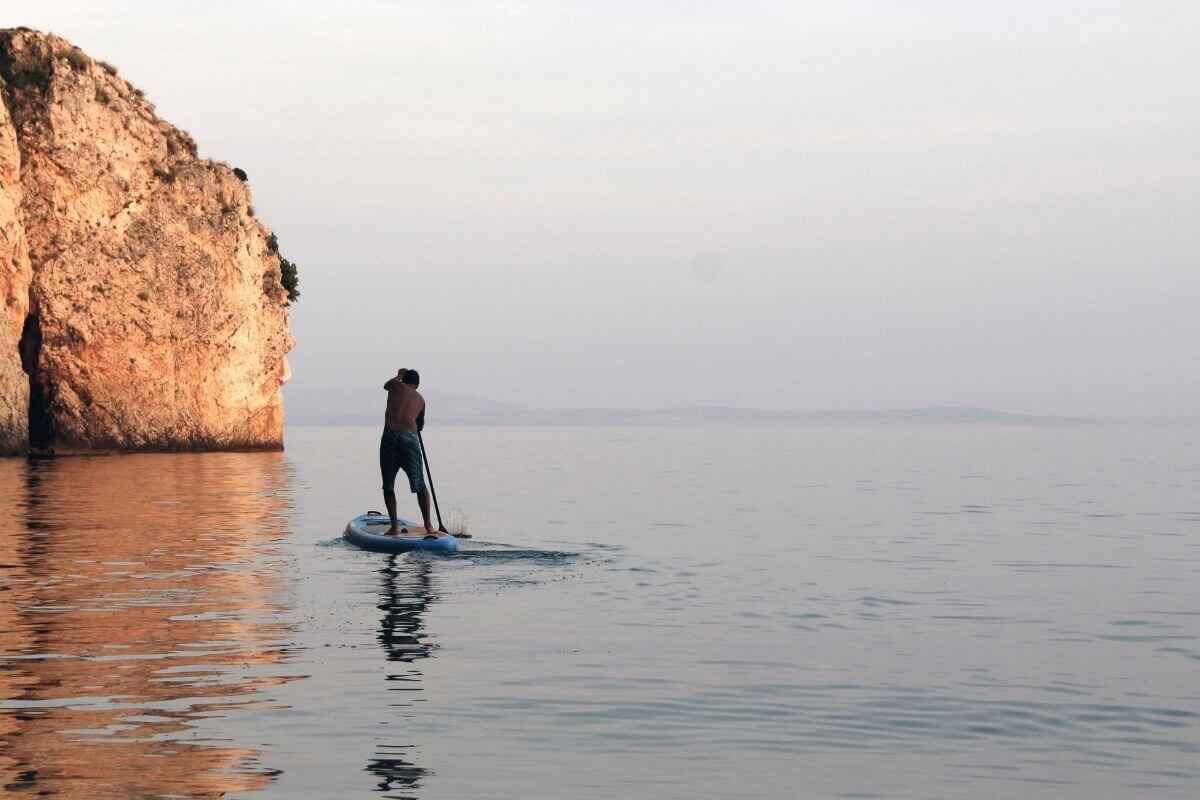
1. How to stand up on a paddleboard
1. When you first get on a paddleboard, it’s important to find your balance. Start on your knees, and then when you feel ok with that, look to the horizon to stand up. Don’t look down or you’ll fall in. From all fours put one foot forward, in the middle of the board, by the side of the handle. Bring the other one to join it.
2. With knees bent, rise up to standing. Keep a slight bend in the knees to take the pressure and strength of the water. Have one foot either side of the handle in the middle.
3. Keep your upright posture with shoulders squared – don’t lean forward or backward from either side.
4. Stay steady and use your stomach muscles to stay centred, and focused.
2. How to stay safe on your paddleboard
Paddleboarders of all ages can enjoy the sport. With that said, it’s important to note some safety tips before getting your feet wet in this activity:
1. Find a flat-water location with low waves and no currents – you’ll be more likely to fall off if there are any sudden changes in water level or momentum.
2. Wear sunscreen when out on the paddle board as well as sunglasses and an appropriate hat.
3. Drink plenty of fluids – fresh coconut water is a good shout.
4. Balance yourself by staying upright without bending forward much – crouching over makes instability worse.
5. Always wear a life jacket or PDF and don’t paddleboard alone. Some boarders may find that they have more difficulty with balance than others so having another person present to help if you fall in or something goes wrong is wise.
6. Avoid going out into rough seas as this increases your chances of getting injured and drowning while also increasing your chance of capsizing due to large waves which will make rescue difficult.
7. Try not go too far from shore as there are no guarantees how long rescuers would take before coming for you even when using other vessels such as kayaks or jets.
8. Always check the weather and winds for before, during and after – you don’t want to get stuck out there battling to come back again.
There are many dangers on the water, and paddleboarding is no exception. It’s important to remember that because your feet aren’t planted firmly into the board like they would be with a surfboard, paddlers can often lose balance or get knocked off of their boards when faced by strong currents or waves. This makes it especially dangerous for those who don’t know how to swim well enough should an accident occur in deeper waters where there may not be immediate help around.
Always use your leash!
3. Keep a good paddleboarding kit list
Paddleboarding is a great way to spend time in the sun. If you’re not sure what to wear on sunny days on the board, here’s what you need:
- All-terrain shorts and shirt for protection from UV rays.
- A paddleboard – there are different sizes with differing levels of buoyancy so be cognisant of that before buying one if possible. Check out my post on which inflatable paddleboard to buy here, if you want some advice.
- Some water shoes or sandals – you can read about the best paddleboarding shoes here
- Sunscreen lotion of at least SPF15
- Some water
- Some sort of waterproof or underwater camera to record your adventures.
You could always ask for one of these paddleboarding gifts for Christmas or birthday to keep costs down.
4. Tips for beginner paddleboarders
What’s the best way to learn how to paddleboard?
The key is just getting out there and trying. Don’t get intimidated by complicated, overwhelming instructions for beginners. The best way to get started standing up on a paddleboard is listed above.
5. Tips for advanced paddleboarders
Once you get the hang of it, try more advanced moves like catching waves or dancing on water.