
16 Best Things to Do in Lake Biwa, Japan
If you didn’t plan on visiting one of the oldest lakes in the world while in Japan, you might need to rethink. In less than I week I saw shrines, meditated, cruised around an island and drank sake! So, here’s 16 of the best things to do in Lake Biwa in Shiga to make you change your plans.
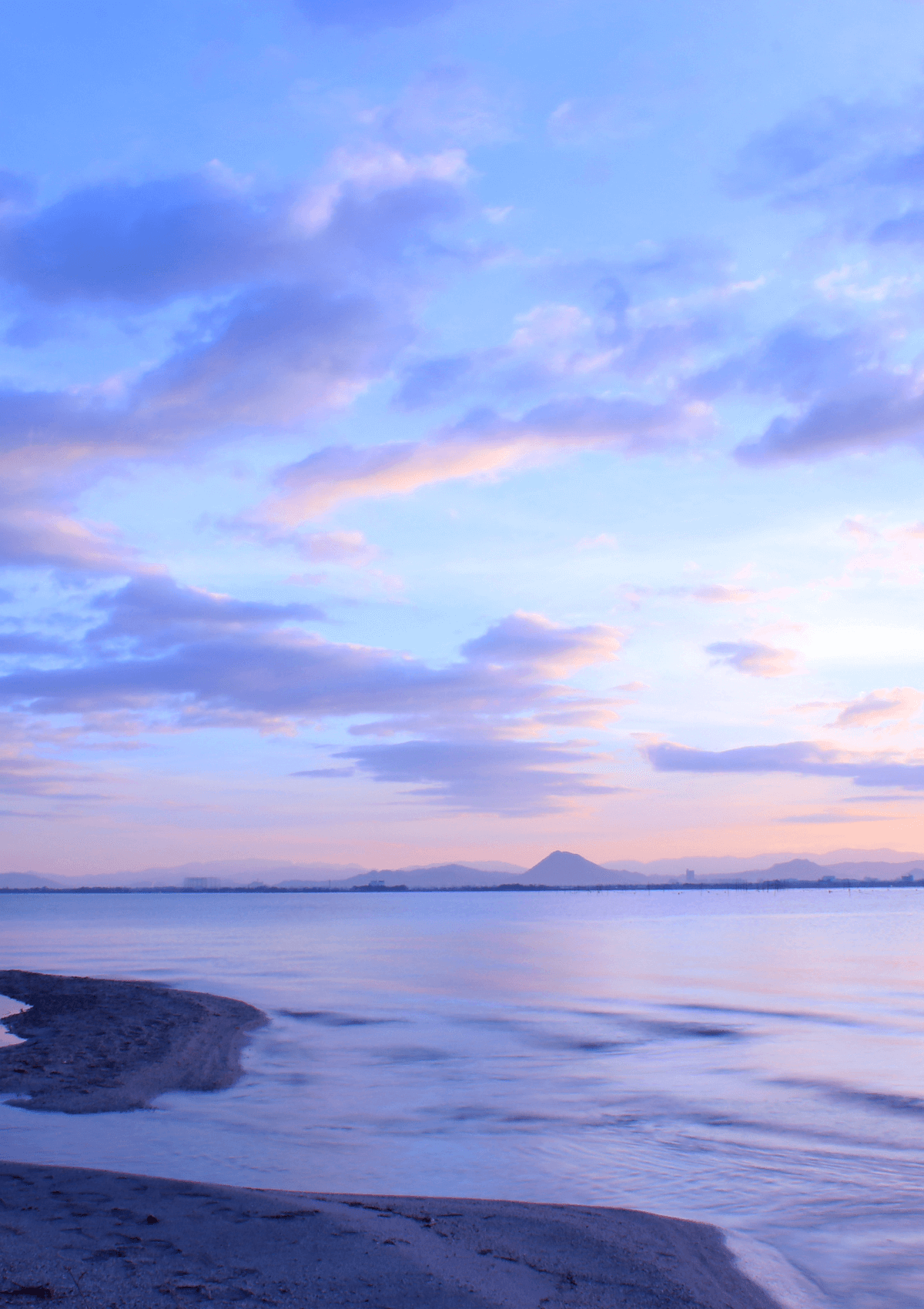
Lake Biwa is Japan’s largest freshwater lake, and also one of the oldest lakes in the world (some estimate four million years old). There are 235km of shoreline to explore and it’s one of the best places for an adventure holiday in Shiga. You can visit old temples and shrines, scramble your way up islands, take a cruise on the water and sample sake!
I spent 5 days in Shiga in Autumn and had a wonderful time. I’d been invited on a press trip and didn’t really have much of an idea of what there was to do there, so this was an amazing introduction to Shiga, and I want to show you what you can expect to see.
Shiga forms a mountainous circle around Lake Biwa, and there’s so much to do around here. These are things I got up to, but you can also keep reading to find other reasons to visit Lake Biwa, as well as the best places to stay.
Top Things to Do in Lake Biwa, Shiga
Whether you want to escape into Japan’s spiritual past or ancient brewing practices, or simply breathe in the nature, there’s lots to explore in this wonderful region.
1. Hikone castle/Genkyuen
Hikone Castle was never invaded, thanks to the impenetrable techniques that went into the architecture. So it’s one of the most well-preserved castles in Japan, surviving wars, fires and the Meiji Restoration—when many castles were dismantled.
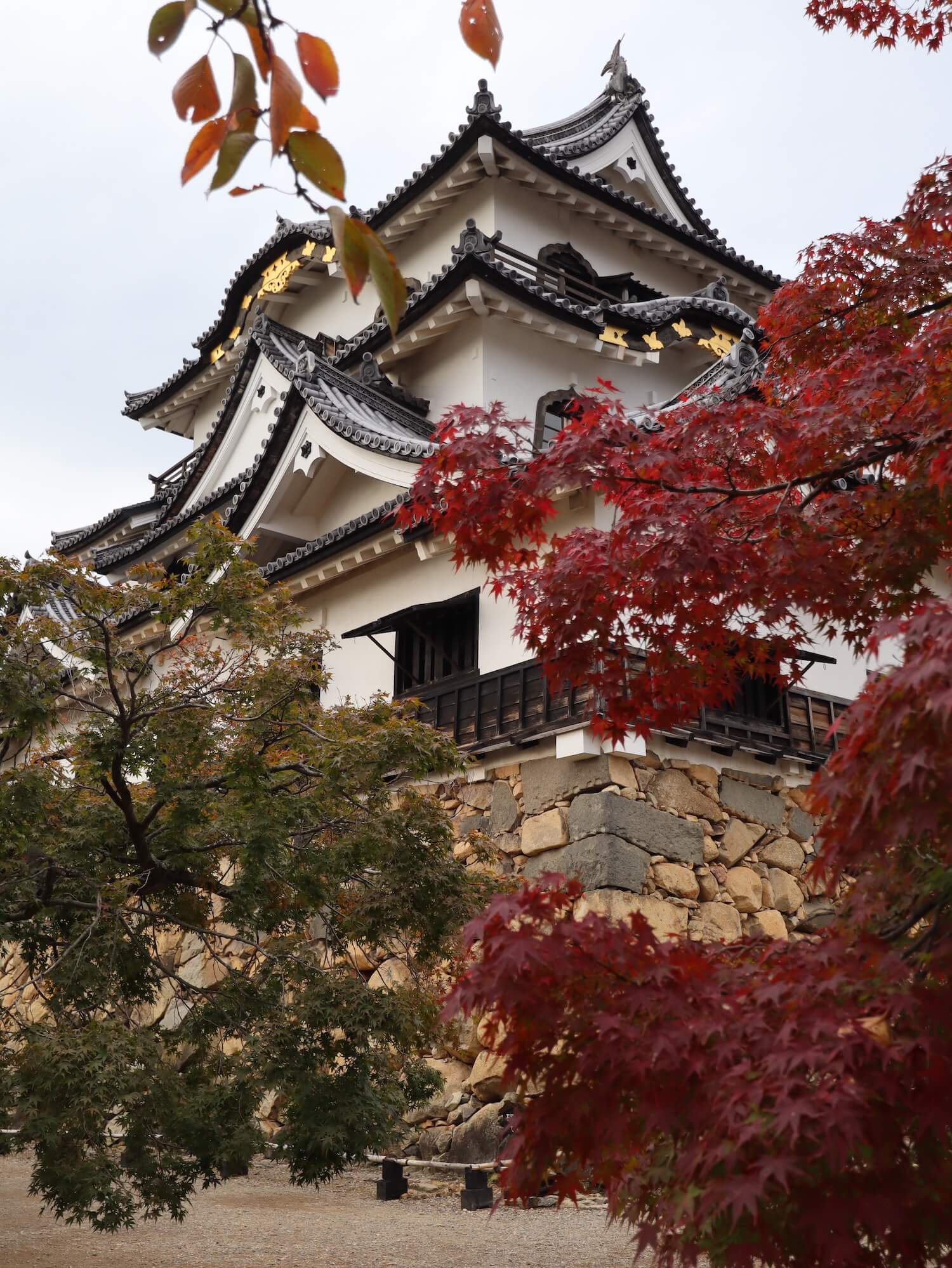
It’s located in the city of Hikone in Shiga Prefecture, along the eastern shores of Lake Biwa. It was constructed in 1603-1622 by li Naokatsu during the Edo period. It was meant to be a symbol of the li clan’s rule, who were in charge over several generations.
Today, Hikone Castle is a popular tourist destination and one of the best reasons to visit Lake Biwa and is designated as a National Treasure by the Japanese government. It provides valuable insights into Japanese feudal architecture and the history of the Edo period. Every year, many visitors climb to the top of the main keep, which has great panoramic views of Lake Biwa and the surrounding city.
2. Hachiman-bori Canal and waterway cruise
The Hachiman-bori is used in many Japanese TV shows and films as a backdrop for olde Japan. You can take a water cruise down the historic waterway or walk along them.
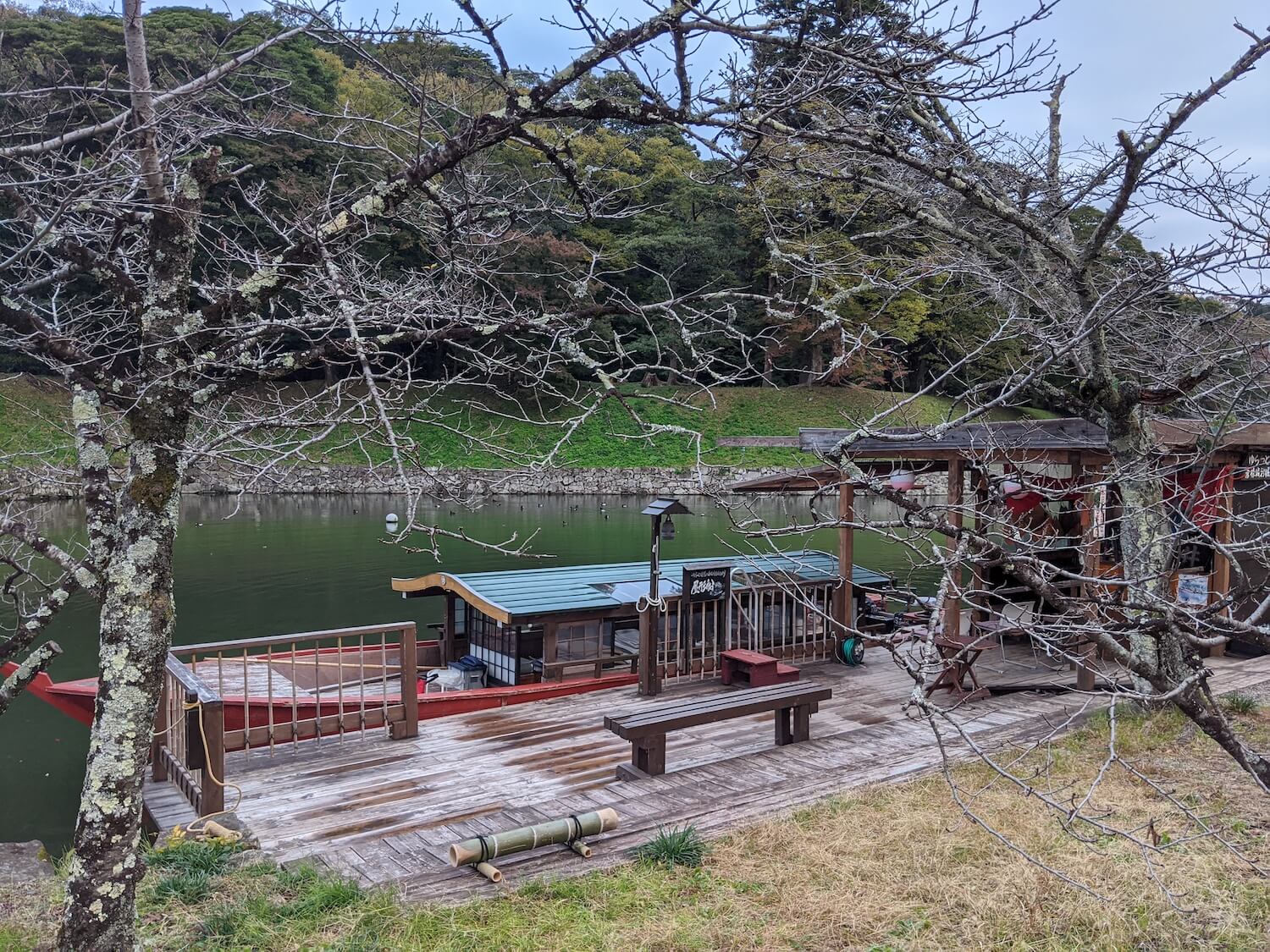
The canal runs through Ōmihachiman City, Shiga Prefecture, near Lake Biwa. It was a vital means of transportation during the Edo period, designed to connect the city to the lake for trade and strategic purposes.
Ōmihachiman rapidly developed as a key transportation and commercial hub, with rice, sake, and other goods being transported via the canal.
If you take a cruise down the Hachiman-bori Canal, you can see well-preserved traditional wooden townhouses (machiya) and storehouses (kura) dotted along the way, reminiscent of the Edo and Meiji periods. There’s also a range of quaint shops, cafes, and restaurants, as well as the Himure Hachimangu Shrine.
3. Omi beef
Many people will tell you that Omi beef is better than Kobe beef, but the people of Shiga are trying to keep it a secret to reduce demand. Here you can try it in every form possible.
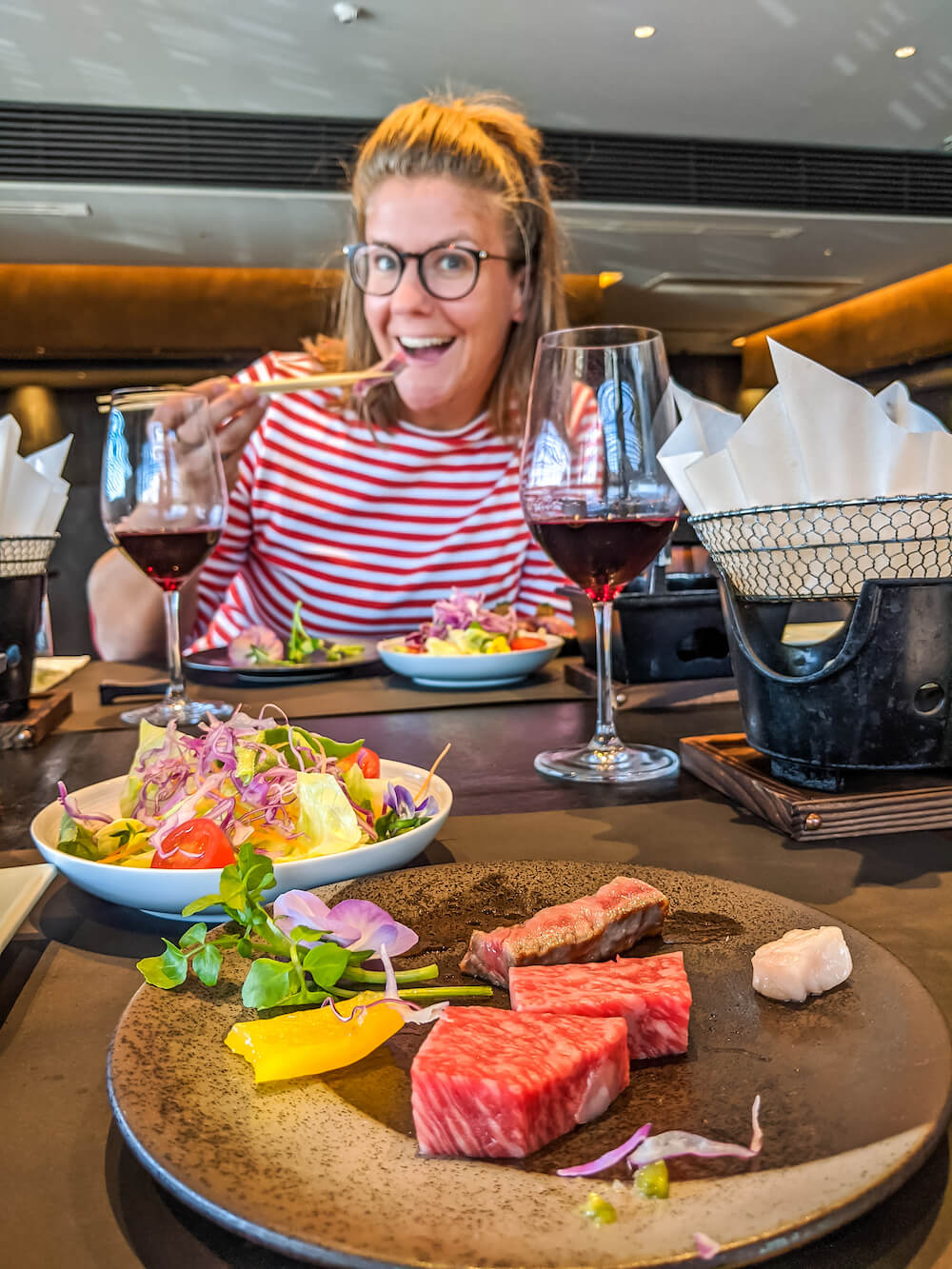
(Morishima/Omi Hachiman main branch)
Omi Beef is one of the ‘Three Great Wagyu’ of Japan, alongside Kobe and Matsusaka beef. It’s been around for 400 years, recognised as the oldest beef brand in the country. You can instantly recognise it by its marbling, tender texture and deep umami flavour.
The cattle are raised in the Shiga Prefecture, with its lush natural environment providing an ideal setting. So if you’re curious to try Omi beef, it’s one of the best reasons to visit Lake Biwa, located in Shiga Prefecture. For more food you NEED to try, check out my list of the best things to eat in Japan.
4. Koka-ryu Ninja House
Koka, along with its counterpart Iga, was pivotal in shaping the history of ninjas in the country – and it’s said that the idea of the ninja was born here. So while there are several reasons to visit Lake Biwa, one of them is that you can visit an actual ninja house here.
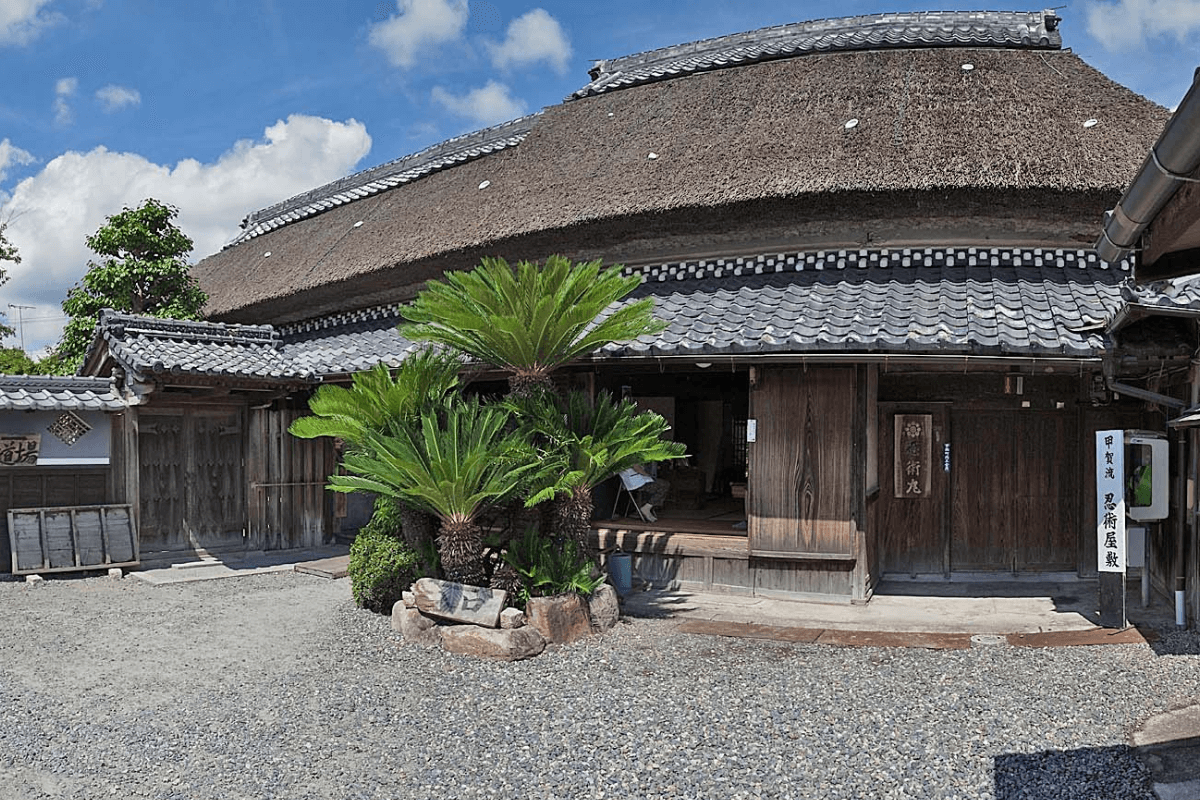
It’s a labyrinth of surprises. With multiple trap doors, hidden compartments, and elaborate escape routes, every corner reveals a story of survival, strategy, and brilliance. It’s a structure designed for elusion and protection, a bit of a contrast to vibes of Lake Biwa surrounding it.
You can tour Kok-ryu Ninja house and see demonstrations of ninja techniques and weaponry like shuriken, katana and blowguns! There’s also interactive sessions where you can put on ninja outfits and try some of the techniques for yourself. They even offer a basic training course!
5. Hieizan Enryakuji Temple and meditation
Sat on top of Mount Hiei is the Hieizan Enryakuji Temple, which is one of the most significant monasteries in Japanese Buddhism. It was founded in 788 AD, becoming one of the top places for Buddhist scholarship and practice – such as kaihōgyō (marathon monks).
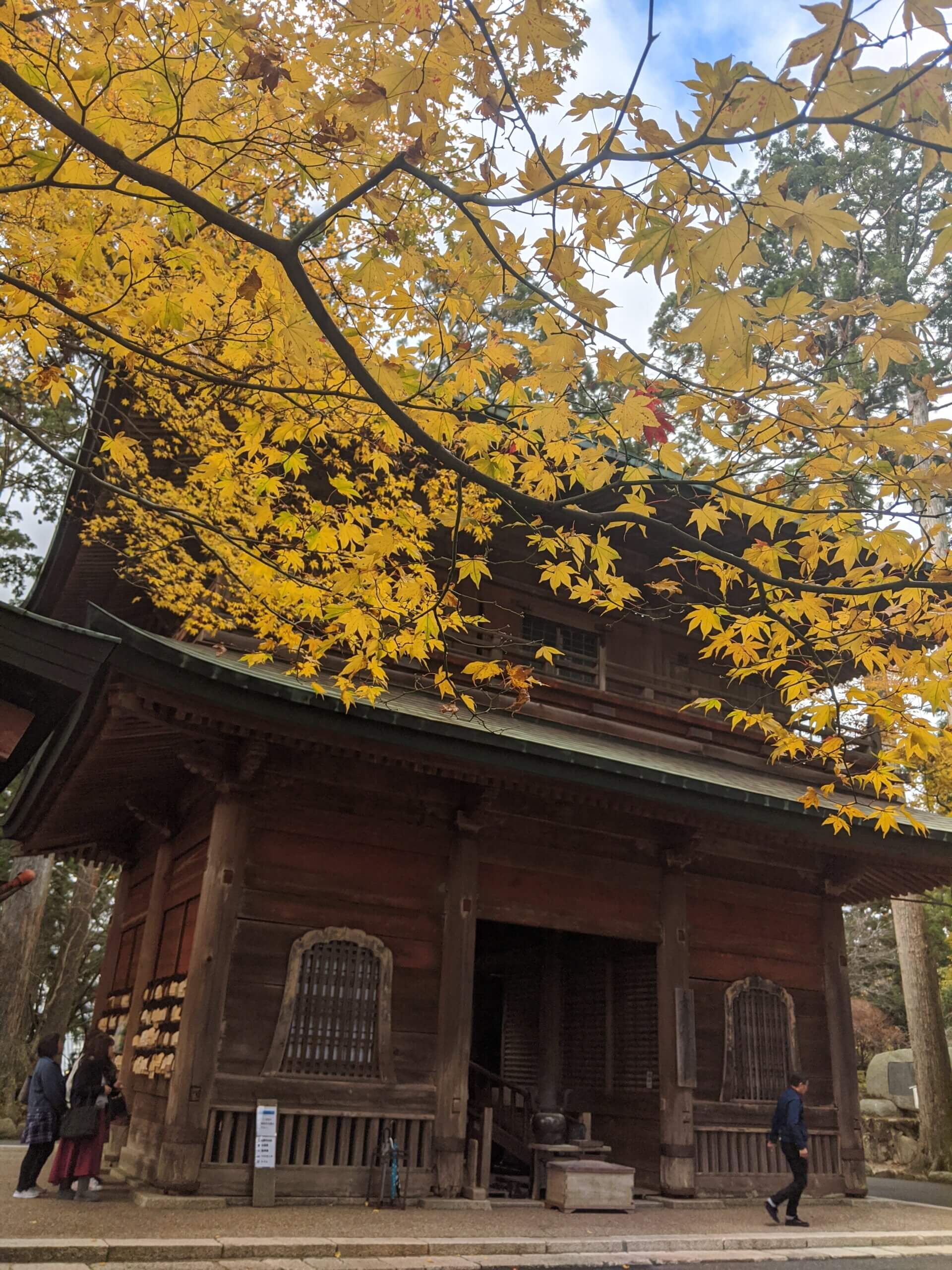
There are over 300 temples up at the Hieizan Enryakuji temple, and it’s one of the highest points around the Lake Biwa. It’s cold up there but totally worth the climb for the views. And you can even book onto a Buddhist monk zen meditation experience to hone your meditation skills.
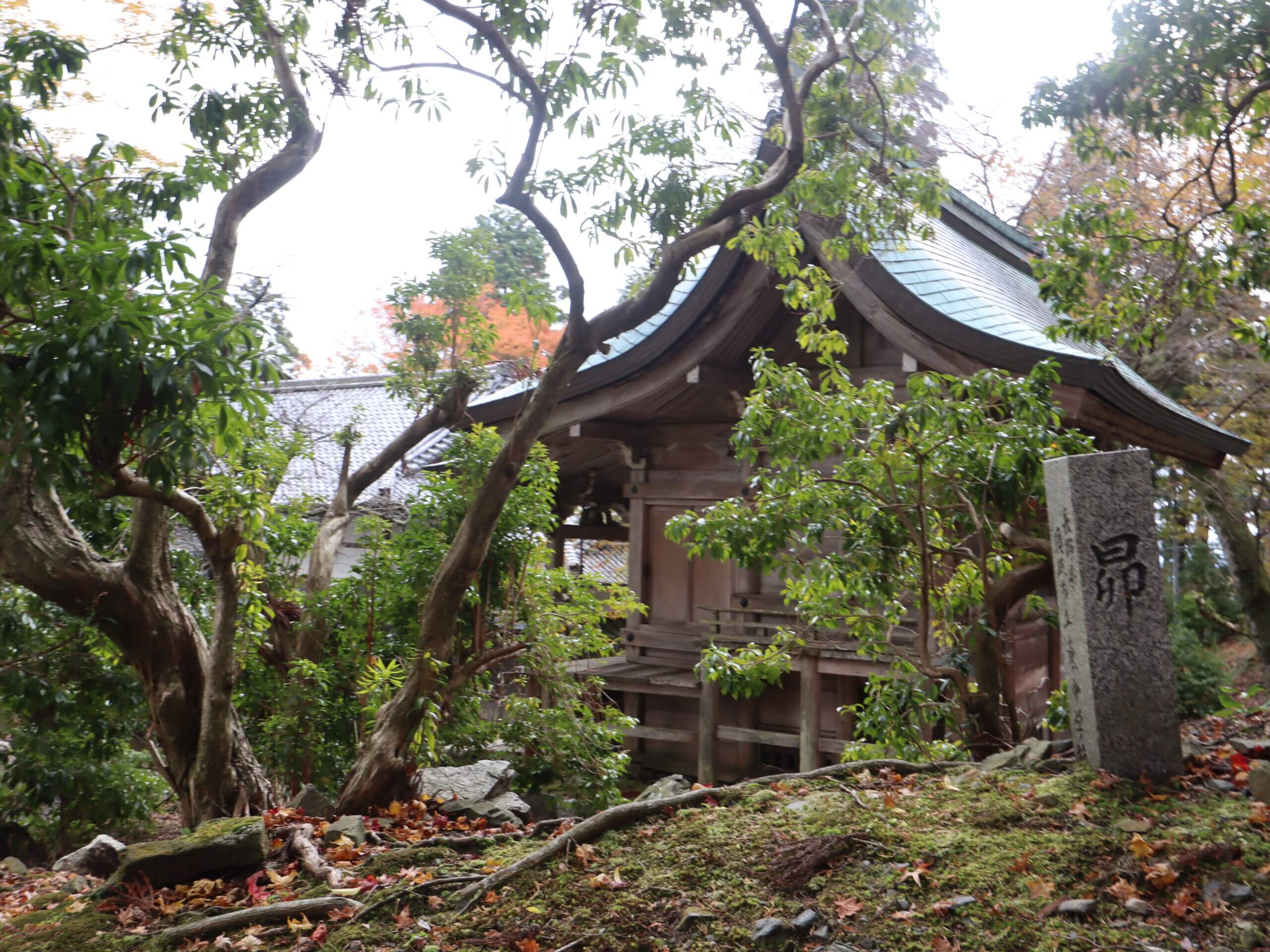
The Hieizan Enryakuji Temple is actually a World Heritage Site. It was partially destroyed over the years but rebuilt during the Edo period. It’s a highly recommended place to visit around Lake Biwa, and if you do choose to meditate there – makes for a great spiritual pause.
6. Shirahige Jinja shrine
Visit the Shirahige Jinja shrine to see the beautiful Torii gate. It’s one of the lesser-known but most beautiful in all of Japan. Visit at sunset to see those dusk colours doing their thing. You can take boat rides out, and explore the temple, but it’s this view that keeps people coming back.
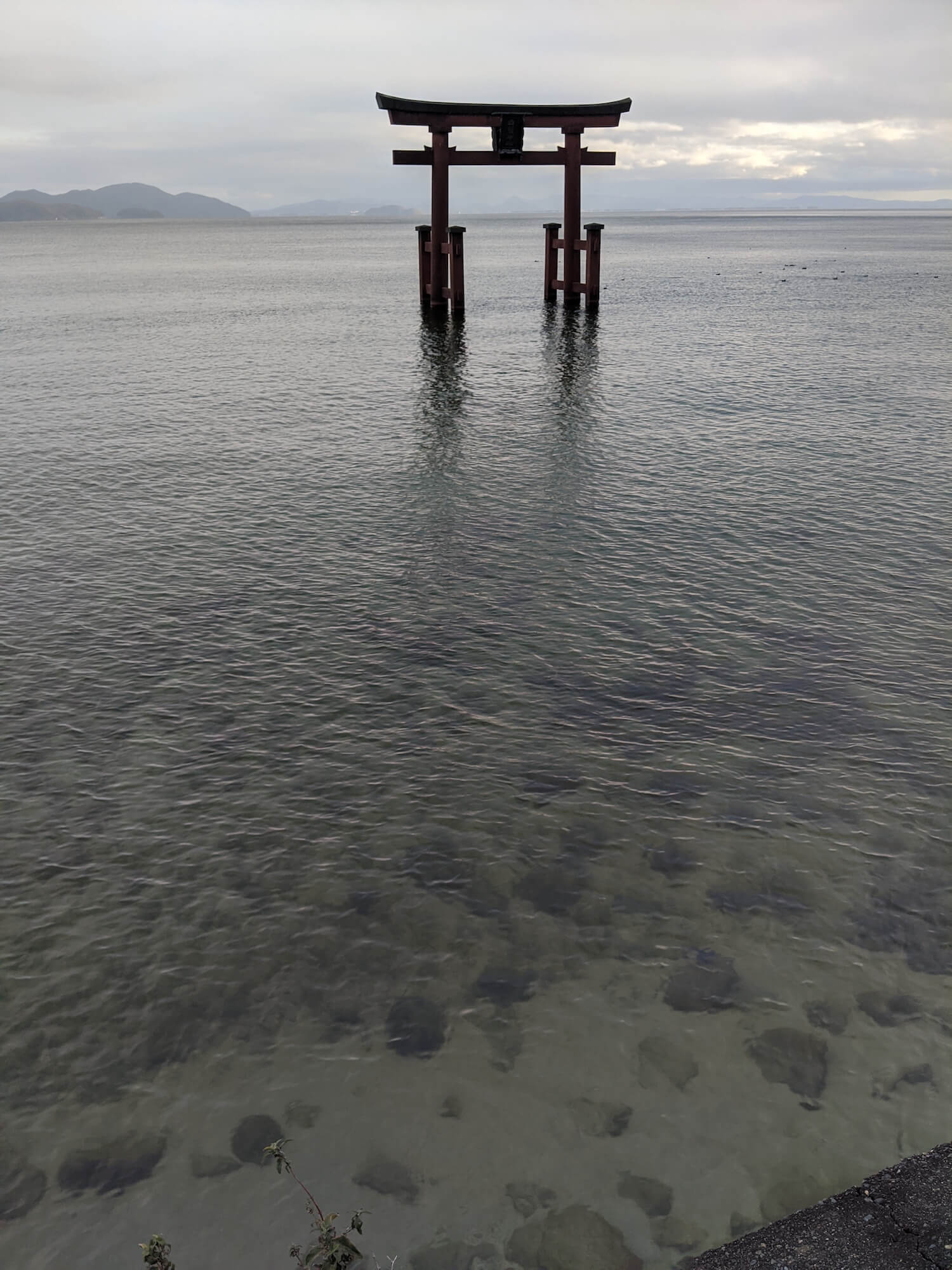
The rest of the shrine is also worth visiting too. Shirahige Jinja Shrine means ‘White Beard Shrine’. This is because it’s among the oldest shrines in Japan, with its history stretching back over 1,900 years. As legend has it, the shrine venerates the deity Sarutahiko-no-mikoto, who is believed to be the god of longevity and good health. So while you’re here, make sure you seek those blessings for a long and prosperous life.
7. Sugaura and a Chikubushima Island cruise
Take a walking tour around Sugaura to learn more about the interesting history of Shiga, and to see the temples and relic gate of the village. Only 100 people live here and it’s set up as an idyllic commune, in a totally idyllic place.
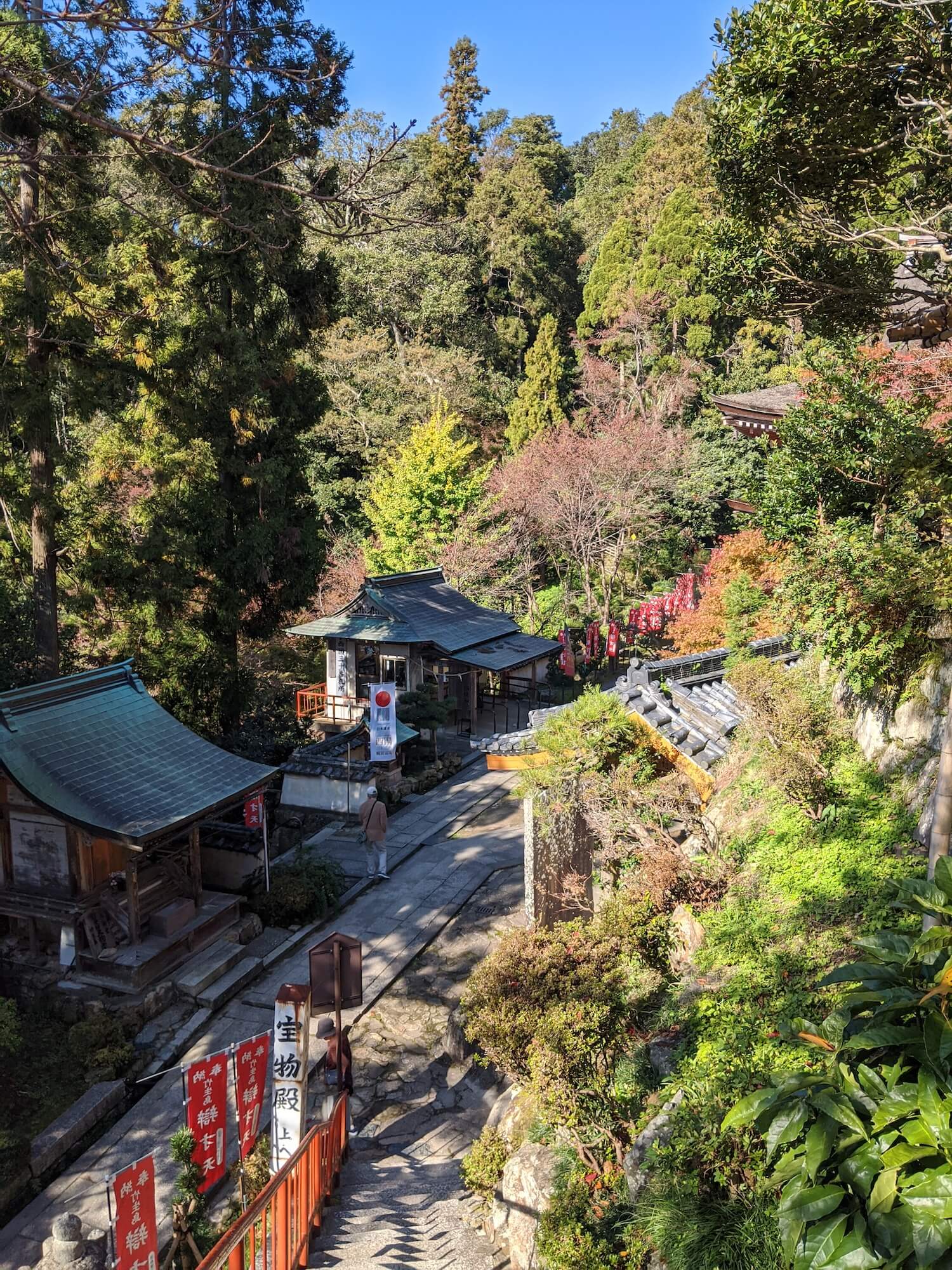
Although most cruises to Chikubushima Island take place from Nagahama, Imazu, or Otsu, Sugaura is a quaint and historic fishing town with traditional wooden houses. It’s worth wandering around before you head off to see the island, which is pretty close by.
This is definitely one of the top things to do in Lake Biwa.
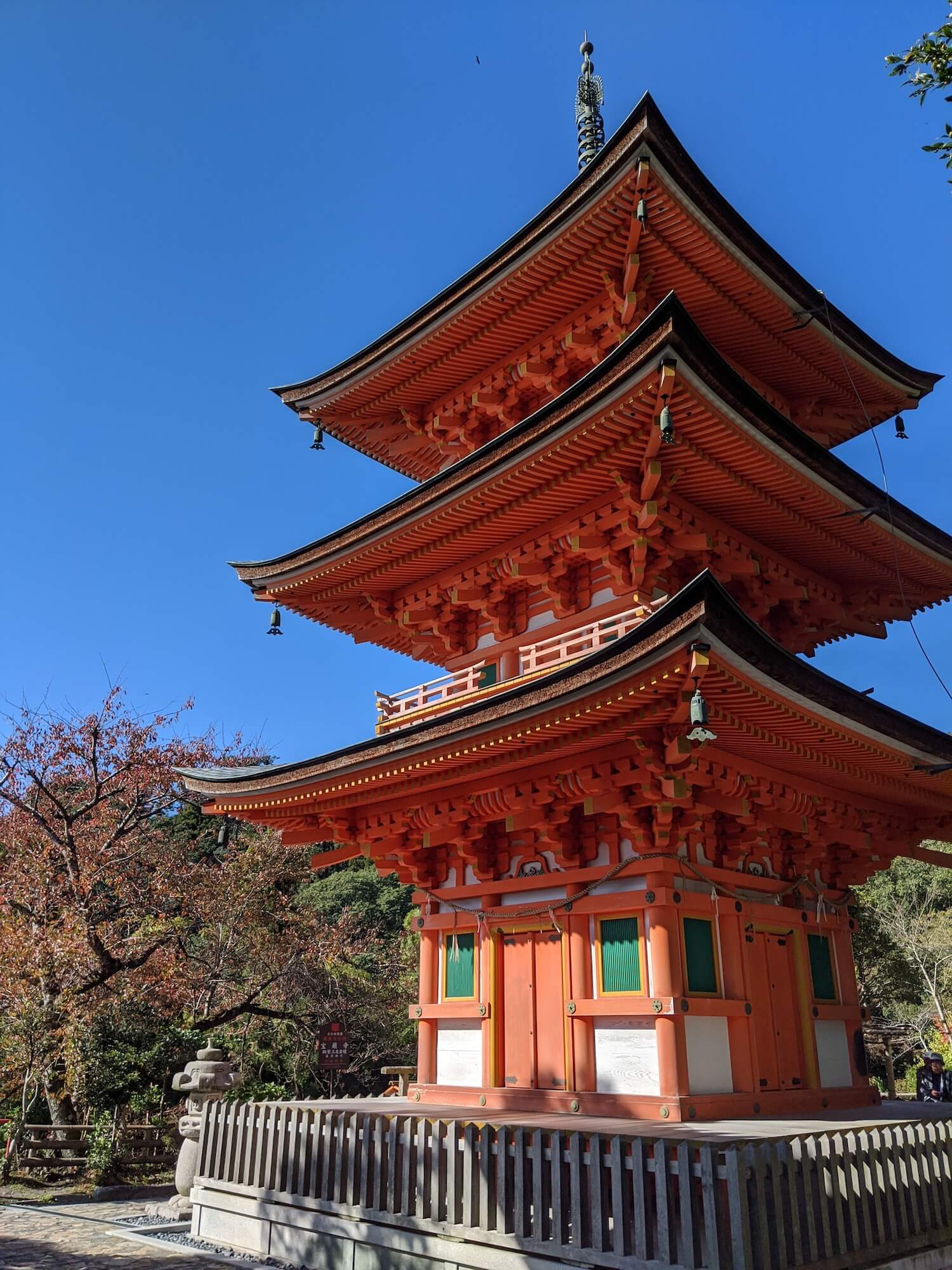
From Sugaura, catch the ferry over to Chikubuhsima Island to see more of the spiritual side of Lake Biwa.
8. Chikubushima island
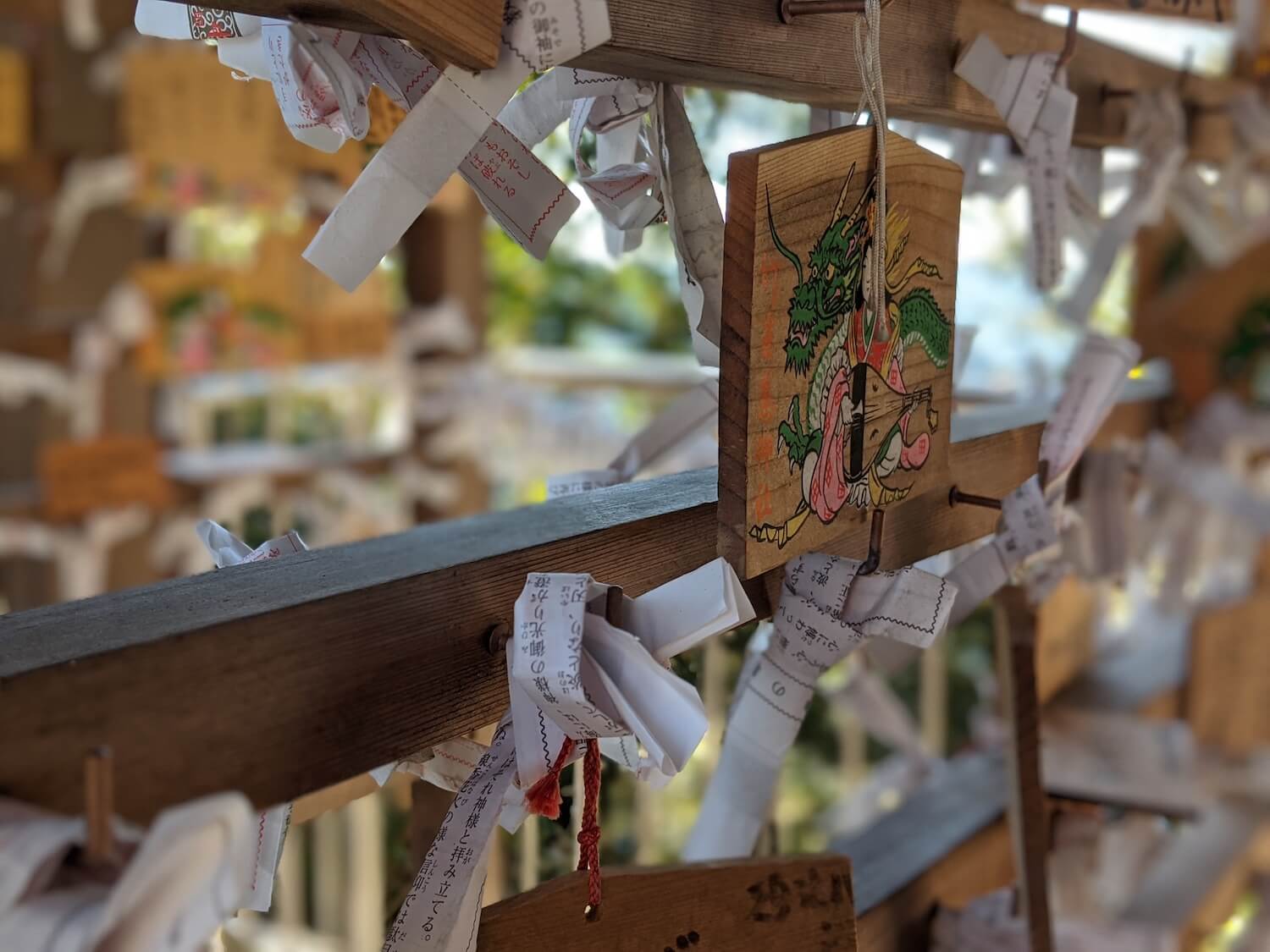
Once you get to the island, you can climb up the stairs to get a fantastic view over Lake Biwa. You’ll also get to see Hogonji Temple and Tsukubusuma Jinja shrine too.
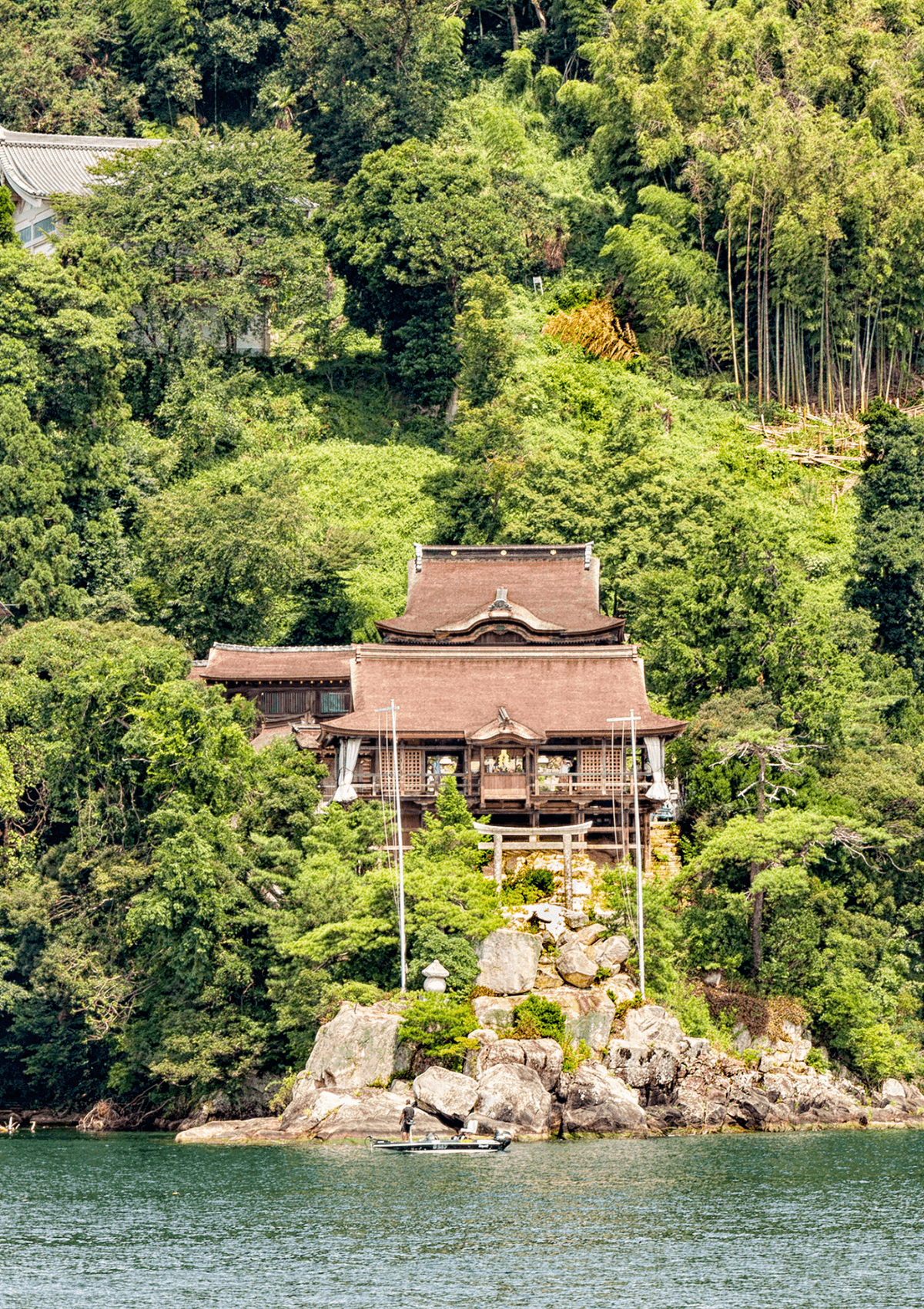
Try throwing a disc off the top and try and if you get it through the Torii Gate, your wish is said to come true! It’s dates back to the late 1500s and is where the goddess Benzaiten is enshrined.
The island is also covered in woodlands, vibrant avian life, and tranquil walking paths for a nice little escape in the middle of a lake!
9. Kawashima Sake Brewery
Wander through the village of Harie Shozu to see their carp farms, and find out how their water irrigation system makes for some of the cleanest water in Japan. Which, makes for excellent water for sake. Yay!
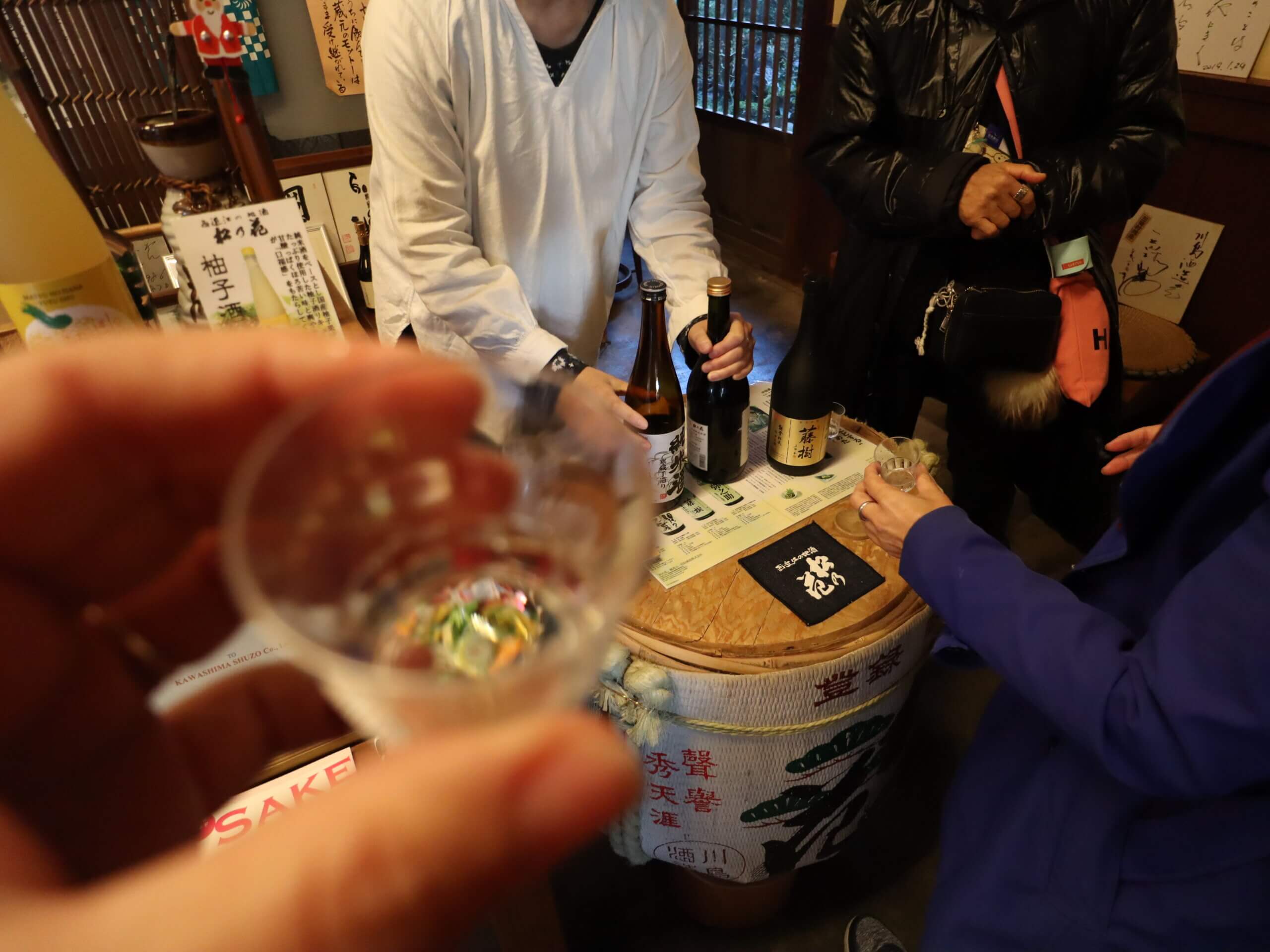
The Kawashima Sake Brewery is based here, and has been since 1865. Pop in for a tour (although it might be a quick look if you don’t have a translator) and to try their different sakes too.
Instead of producing for large companies, Kawashima dedicated itself to crafting Sake exclusively for its clientele, concentrating on developing its signature brand, “Matsu no Hana”. So make sure you give that one a go!
More things to do around Lake Biwa
It was impossible to do absolutely everything Lake Biwa and the Shiga region has to offer in just five days. Not because I didn’t make the most of it, but just because it’s such a dynamic and interesting part of the world to explore with so much to see and do.
And if you’re there for an even shorter period of time, planning is key, which is where my 4-day to-do list for Shiga comes in handy.
So here are some of the things I didn’t have time for, but are definitely worth considering. They’e part of the many reasons to visit Lake Biwa and Shiga, drawing in tourists year-round.
10. Omimaiko Beach
The white sands of Omimaiko Beach are on the west side of Lake Biwa. It’s easy to get to by train, where you can stop at Omimaiko Station close by.
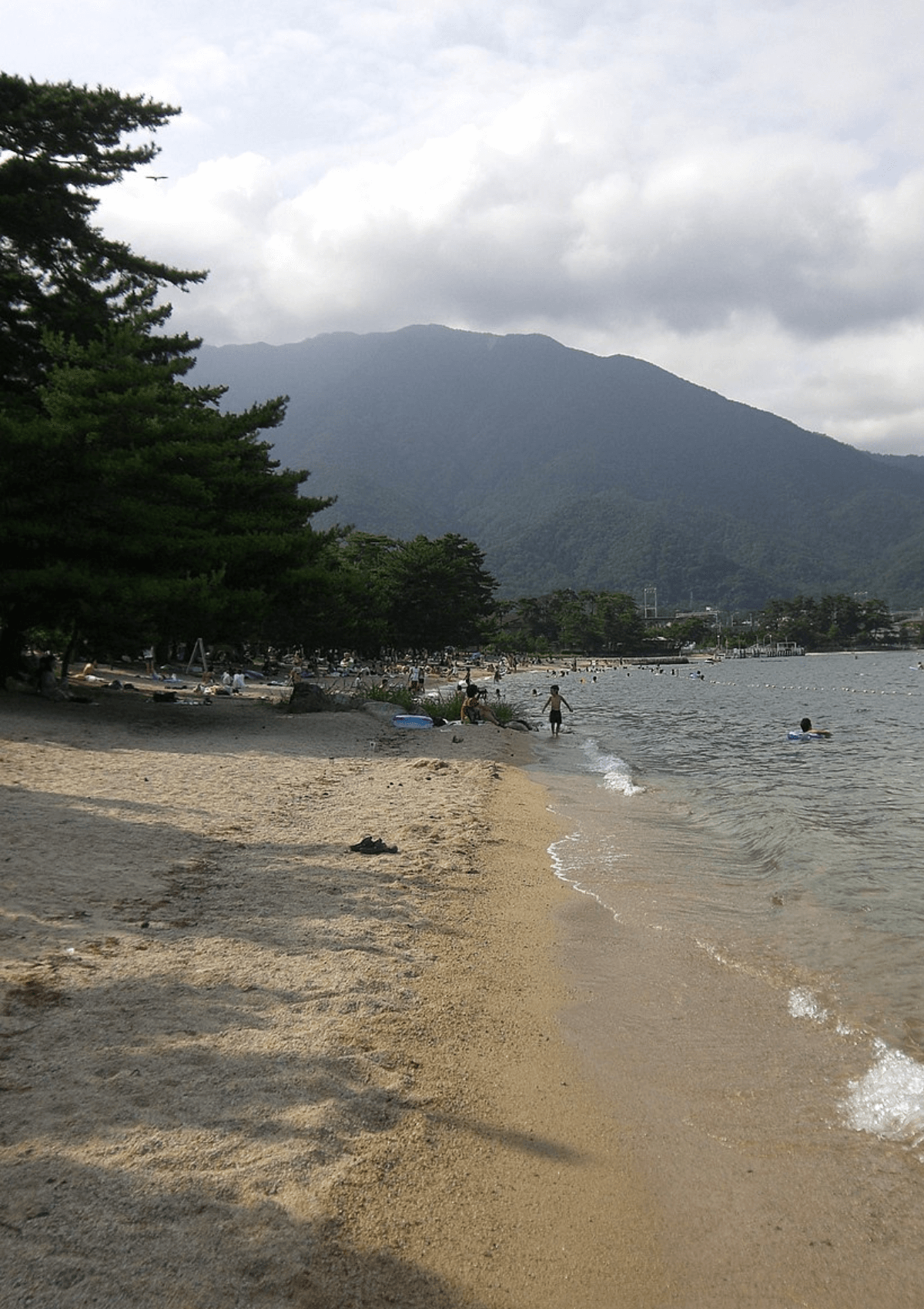
Omimaiko’s sands stretch generously along the lake, providing lots of space for both relaxation and recreation. There’s also backed by pines so it’s a really beautiful place of the world to be. You can also play volleyball, or even kayak or paddleboard to take in the views of mountains from the water.
11. Ogoto Onsen
Also on the west side, Ogoto Onsen is a popular hot springs area with many hotels. Some are open to day trippers for a small fee.
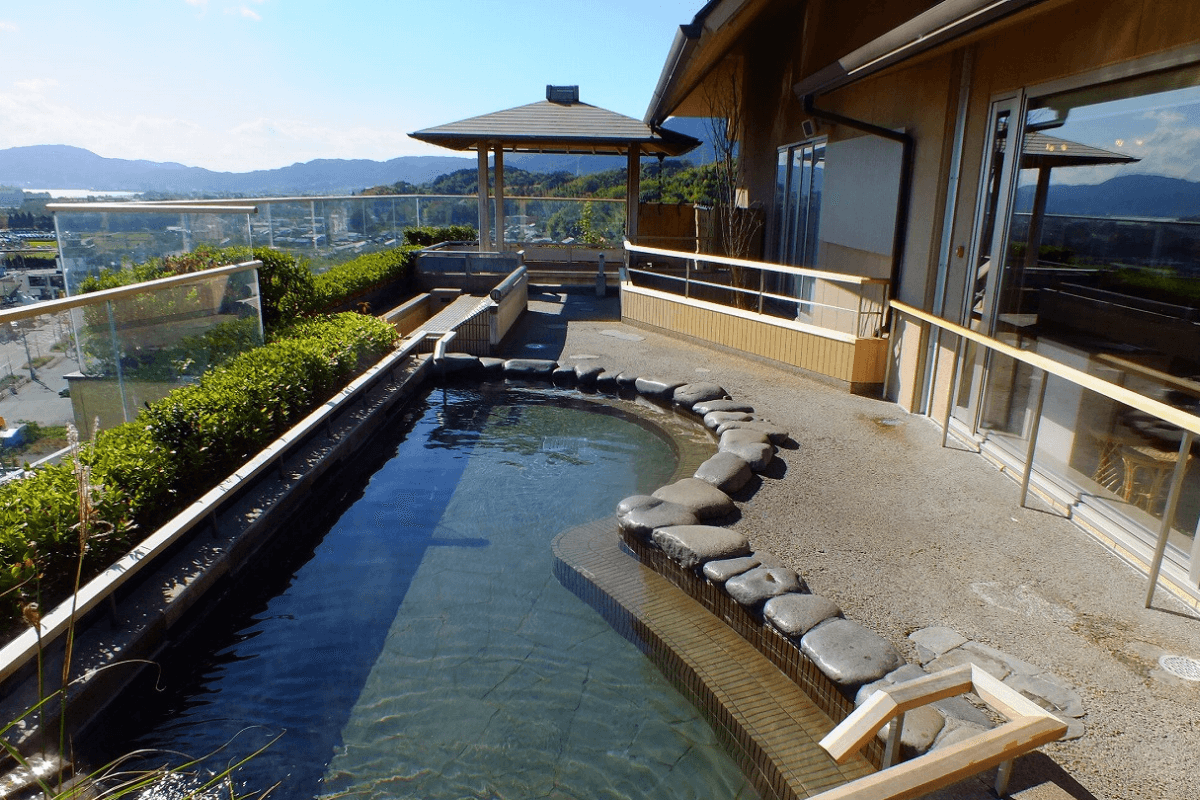
Ogoto Onsen’s history is steeped in legend and spirituality. It is said to have been discovered over 1,200 years ago and is closely associated with the revered Buddhist monk and scholar, Honen, who purportedly utilised these hot springs during his retreats.
The hot spring waters of Ogoto Onsen are alkaline in nature, known for their silky texture that is gentle on the skin. Rich in beneficial minerals, these waters are often sought out for their potential to alleviate a variety of ailments, including muscle pain, joint stiffness, skin conditions, and fatigue.
12. Windsurf or go sailing
Lake Biwa’s geographic orientation often results in consistent winds, particularly during certain seasons, so it’s the perfect location for windsurfing. There are several windsurfing or sailing schools or rentals dotted along the lake that you can enquire at.
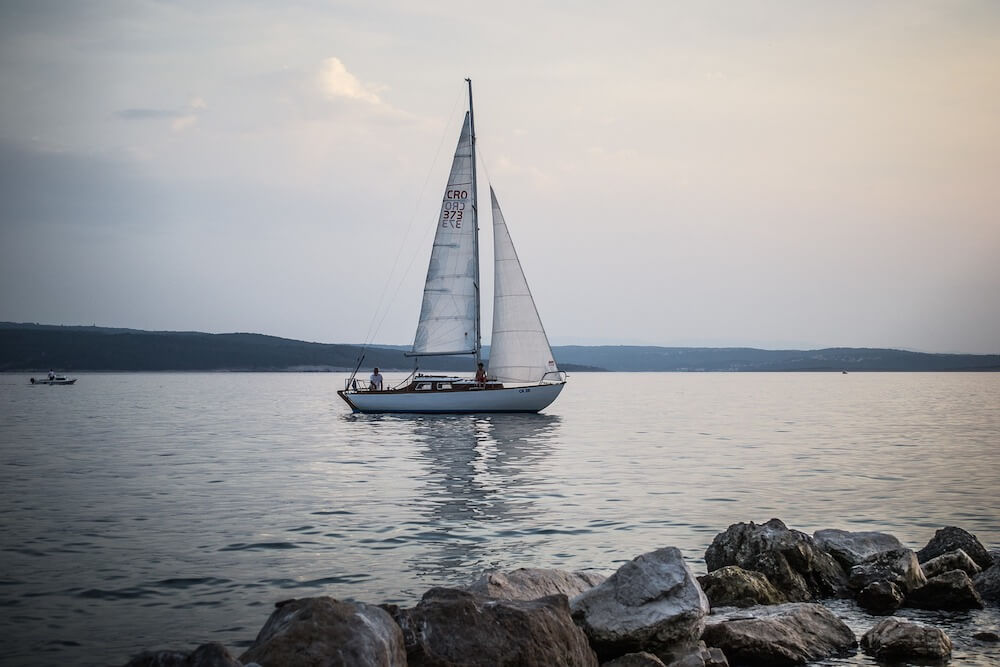
If you’re a pro or just like watching, Lake Biwa frequently hosts windsurfing events and competitions, drawing enthusiasts from all over Japan and beyond.
13. Okishima island, also known as cat island
One of Japan’s cat islands, Okishima island is one of the best reasons to visit Lake Biwa if you love felines! They outnumber people, which could be due to the fact bikes are the old mode of transportation here so they’re less likely to be scared by cars, or that there’s only 350 people living here.
Either way, if you love cats you need to get yourself to this floating island. Even if you don’t, it’s a pretty place to visit – but it’s handy if you do give they’re everywhere.
14. Biwako Valley
Biwako Valley is probably the most well-known attraction around Lake Biwa. It’s a ski resort in the winter, where lots of people come to ski or snowboard. But it’s also open year-round for Shiga hikers, who can climb the mountains in warmer months where there’s no snow.
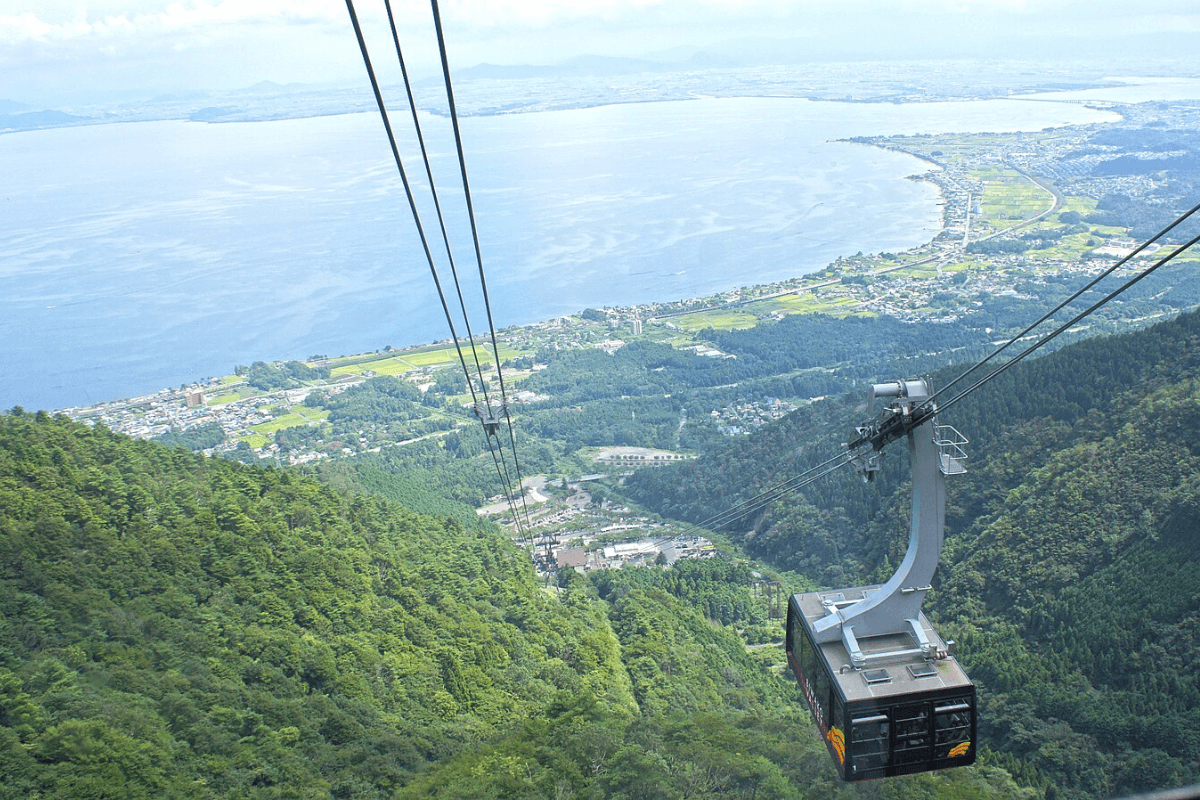
The Biwako Valley Ropeway, one of the area’s highlights, takes visitors on a breathtaking ascent, providing amazing views of Lake Biwa below.
15. Tarobogu Bonfire Festival
On the first Sunday in December, you can enjoy bonfire displays on the mountains by Tarobogu Shrine. On the day, there are lots of shuttles taking you from Tarobogu-mae Station to the shrine, or you can climb the 700 steps to get to it.
Once the bonfire gets going, 100,000 goma prayer tablets from all over Japan are burnt in the fire. The festival is part of Shinto and Buddhist practices, using fire to ward off evil and cleanse the soul and body.
16. Miho Museum
If you love architecture or art, the Miho Museum is another of the top reasons to visit Lake Biwa. It’s designed by world-famous architect I. M. Pei, offering visitors an impressive fusion of man-made and natural beauty.
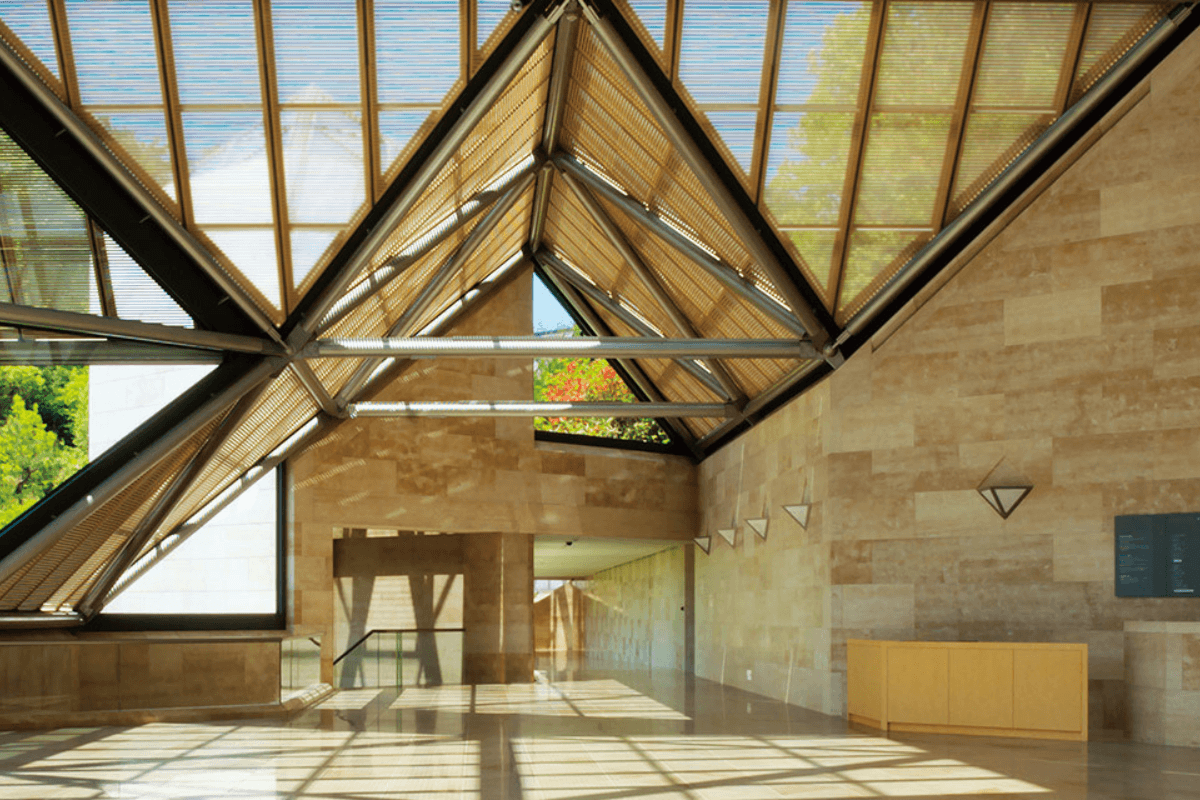
The museum’s entrance is particularly noteworthy. Visitors cross a luminous tunnel and a futuristic suspension bridge, which is supposed to be a symbolic journey of transitioning from a chaotic outer world to the peaceful realm of art and nature.
Inside, the Miho Museum houses a collection of over 2,000 artworks, with about 250 on display at any given time. These range from ancient civilisations of Egypt, Greece, and Rome, to treasures from Silk Road cultures, and even include pieces from various Asian countries.
How to Get to Lake Biwa
Lake Biwa is in the Shiga Prefecture, but it’s really easy to get there from Kyoto.
You can get the train easily from Kyoto Station to Otsu. This costs ¥180 – ¥250 and takes just ten minutes. Go to Otsu if you want to be at the southern tip of Lake Biwa, or catch the train to Hikone if you want to be on the east side.
There’s also a bullet train from Hikone and Maibara stations. Take the Tokaido Shinkansen from Tokyo to Maibara Station. From Maibara, local trains or buses can take you to various points around Lake Biwa. Another option is to get off the Shinkansen at Kyoto and then take the JR Biwako Line as mentioned above.
You can visit Shiga direct from Kansai Airport. Just get the Haruka limited express train to Otsu from Kansai International Airport in around 80 minutes.
Another option is to rent a car from Kansai International Airport. Major car rental companies like Nissan Rent-a-Car, Toyota Rent-a-Car, Nippon Rent-a-Car, Orix Rent-a-Car, and Times Car Rental have counters at Kansai Airport. They often have a range of vehicles available, from compact cars to larger vans.
Where to stay around Lake Biwa
There are lots of options to stay close by Lake Biwa and explore the region.
Some of the best options are in Otsu, where you could choose to stay at Lake Biwa Otsu Prince Hotel; a towering luxury hotel offering magnificent views of the lake. It’s also conveniently located with easy access to both Kyoto and Shiga. Or there’s lots of traditional Japanese inns known as Ryokans, where you can experience authentic Japanese hospitality, complete with tatami rooms and onsen (hot spring) baths.
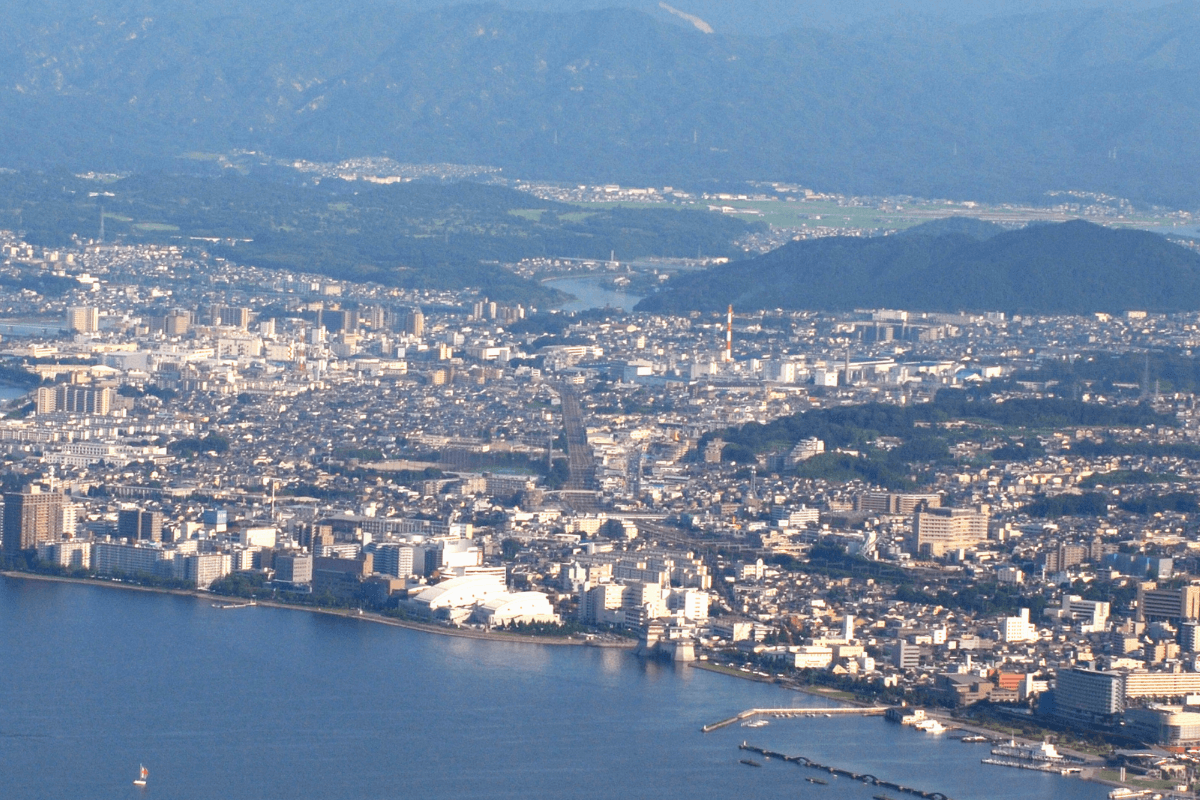
Or why not stay in Hikone, which is a historic town with a castle right by the shores of Lake Biwa. You can find all sorts of modern places to stay like Comfort Hotel Hikone and Hikone Castle Resort & Spa.
To the north of Lake Biwa lies Nagahama, another city with a castle and panoramic lake views. Nagahama is also known for Kurokabe Square, where traditional black-walled buildings house glassware shops – a nod to the city’s famed glass craftsmanship. The Nagahama Railway Square is another attraction, celebrating the city’s historic connection to railways.
You could also look into camping around Lake Biwa, where there are lots of campsites to pitch your tent. This gives you more immediate access to the area’s natural features and is a more budget-friendly option to try.